
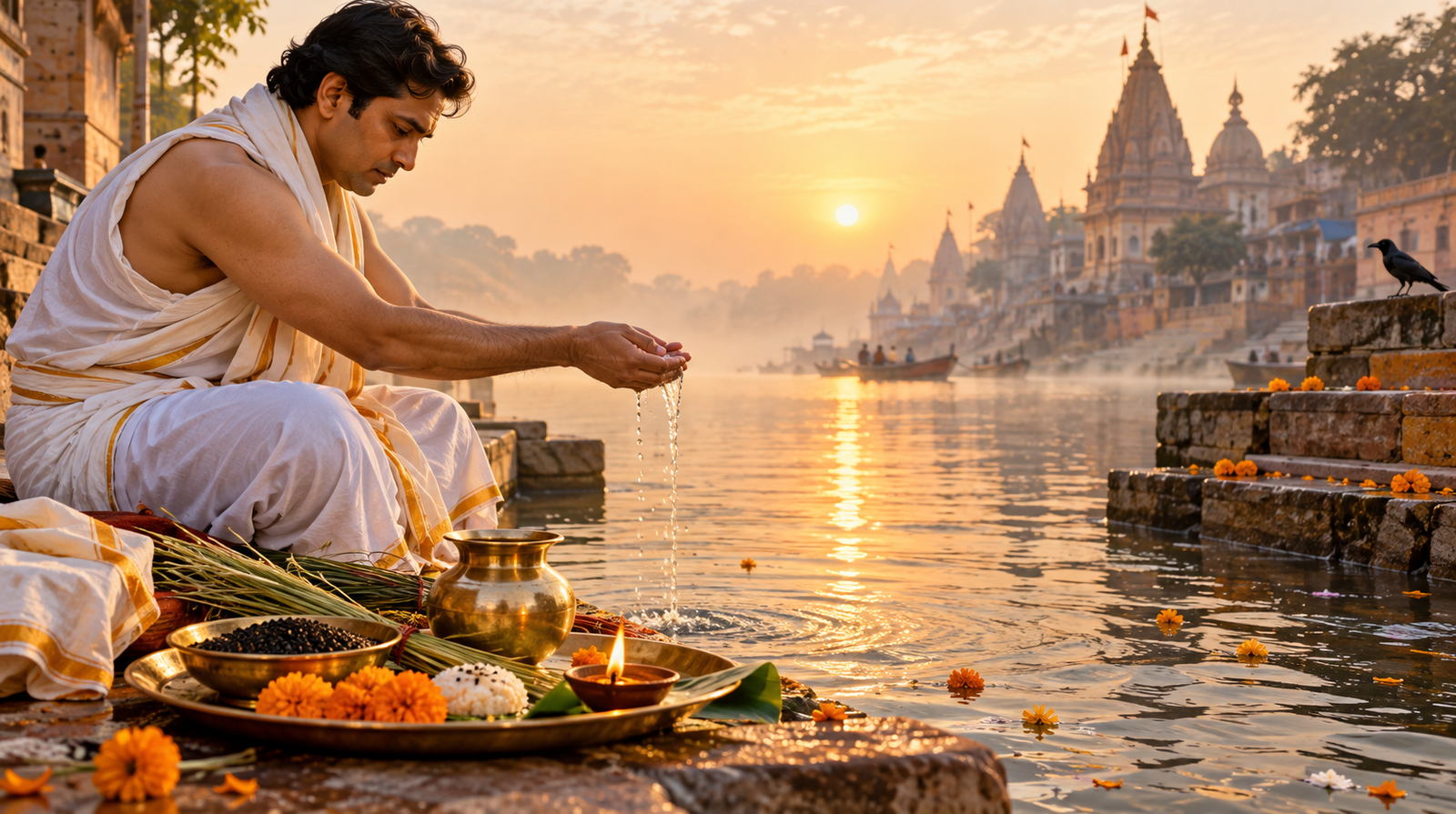
Pitru Paksha is a time to remember our ancestors with respect, gratitude, and devotion. It offers an opportunity to honour those whose love, efforts, and contributions helped shape our families.
A common question is: What should we do every day during Pitru Paksha? Even when elaborate arrangements are not possible, you can observe this period through sincere prayer, charity, and self-discipline, according to your means and family traditions.
Practices vary across families, regions, and communities. The following suggestions are general guidance. For formal Shraddha and Tarpana ceremonies, follow your family’s customs and consult a knowledgeable priest.
1. Begin the Morning with Cleanliness
Take a bath in the morning and wear clean clothes. Keep your home’s prayer area clean and tidy.
Before praying, sit quietly for a few moments. Set aside this time to remember your ancestors and reflect on the values they passed down to you.
2. Light a Lamp and Remember the Divine
Light a lamp in a safe place in your home’s prayer area. According to your family tradition, offer prayers to Lord Vishnu, your family deity, or your chosen deity.
Pray for the well-being, wisdom, and peace of your family. Always take appropriate fire precautions and avoid leaving a burning lamp unattended.
3. Remember Your Ancestors with Respect
Remember your departed parents, grandparents, and other ancestors with gratitude. If you know their names, you may mention them in your prayers.
You can also offer collective prayers for ancestors whose names are unknown. Reflect on their positive qualities, sense of responsibility, and life lessons, and resolve to carry those values forward.
4. Follow Family Customs for Water Offerings and Tarpana
If water offerings are part of your family tradition, perform them according to the prescribed customs. Facing south while offering water, and using black sesame seeds and kusha grass, are practices followed in many families.
However, a simple prayer of remembrance and formal Tarpana are different practices. If you are uncertain about the mantras, procedure, timing, or who should perform the ritual, seek guidance from a knowledgeable priest.
5. Donate Food According to Your Means
You may donate meals, fruits, or other suitable food according to your capacity. Offering food respectfully to someone in need can form part of your daily observance.
Charity does not require an elaborate arrangement. Provide clean, suitable food and remain considerate of the recipient’s needs and dignity.
6. Offer Suitable Food to Animals and Birds
Offering food to cows, dogs, and crows is a custom observed in many families. You may follow this practice if it forms part of your family tradition.
Choose food appropriate for the animal or bird. Keep the surroundings clean and avoid placing food where it could obstruct traffic or create a hazard.
7. Maintain a Sattvic Diet and Practise Self-Restraint
Follow a simple, sattvic diet according to your family’s customs. Many families refrain from non-vegetarian food and alcohol during this period.
Also try to avoid unnecessary anger, arguments, and harsh words. Speak to family members with patience and kindness. Alongside dietary discipline, give attention to your conduct and relationships.
8. Read Sacred Texts or Chant with Devotion
According to your beliefs and established practice, you may read the Bhagavad Gita, recite the Vishnu Sahasranama, or chant the name of Lord Rama in respectful remembrance of your ancestors.
If your schedule is busy, spend a few minutes in attentive prayer. When a longer recitation is not possible, you can still express your gratitude through sincere remembrance.
9. Offer Prayers Again in the Evening
In the evening, you may light a lamp safely and remember your ancestors once more. Express your gratitude and pray for your family’s peace, health, and wisdom.
You can also share stories about your ancestors with younger family members. Remembering their good deeds and teachings helps preserve family memories for the next generation.
A Simple Daily Prayer 🙏
You may use the following words as a personal prayer. They are not a substitute for the prescribed mantras used in formal Shraddha or Tarpana ceremonies.
Om Pitribhyo Namah.
I offer my humble respects to all my ancestors, known and unknown, from both my maternal and paternal lineages.
I am grateful for their love, sacrifices, and contributions.
May their blessings help our family remain happy, peaceful, healthy, and guided by wisdom.
May we find the strength to uphold their good teachings and values.
A Simple Routine for a Busy Schedule
If you have limited time, you can follow a manageable daily routine:
- Morning: Bathe, wear clean clothes, and spend a few minutes in prayer and remembrance.
- During the day: Donate food or help someone in need according to your means.
- Throughout the day: Practise moderation in food and behaviour, and avoid unnecessary disputes.
- Evening: Remember your ancestors and pray for your family’s well-being.
This routine is intended for daily remembrance and prayer. If your family observes Shraddha on a particular tithi or performs other formal ceremonies, follow the separate guidelines for those rituals.
Respect Your Family’s Traditions
Pitru Paksha practices are not identical in every household. Differences between your customs and another family’s practices do not automatically make either tradition incorrect.
For specific Shraddha and Tarpana procedures, follow your family’s established tradition and the guidance of a knowledgeable priest. Remember your ancestors with gratitude and care, and preserve their positive teachings through your everyday actions.